
Optimizing Building Envelope Design for Subtropical High-Rise Offices in Shenzhen: A Parametric Analysis of Multiple Building Performance Indicators
Lei Yu, Caifang Lin, Pengyuan Shen
2025
International Conference on Energy and Environmental Science
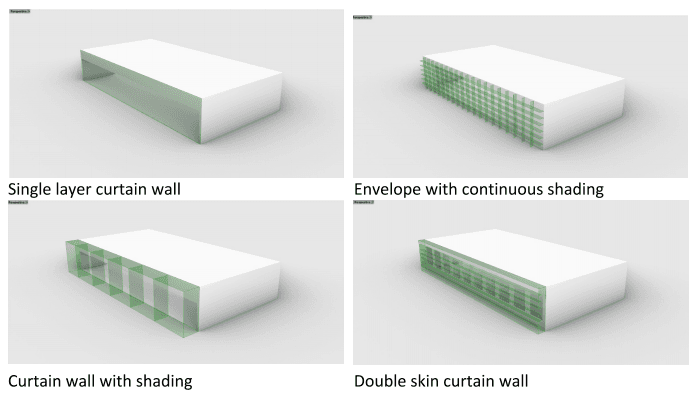
Fig. 1. Modeling of subtropical high-rise office building envelope
Summary
This study optimizes building envelope designs for high-rise offices in Shenzhen's subtropical climate through parametric analysis and orthogonal experiments. By evaluating four envelope types using EnergyPlus and Radiance simulations, the research identifies optimal strategies to balance thermal comfort and useful daylight illuminance (UDI). Key recommendations include specific ranges for window-to-wall ratios (0.4–0.6) and glass thermal properties. These findings provide quantitative guidelines to support decision-making for energy-efficient passive design.
Abstract
The high-rise office development surge in China’s subtropical areas resulted from rapid urbanization and led to the adoption of large-area glass curtain walls that produce significant energy consumption challenges and thermal comfort issues. The research analyzes subtropical climate building envelope design strategies using typical office space in Shenzhen as case study. Through analysis of over 90 representative modern office buildings, four primary envelope types were identified: the primary office building envelope types consist of single-layer curtain walls at $59 \%$ followed by single-layer curtain walls with shading at $32 \%$ and double-layer curtain walls at $5 \%$ and continuous shading structures at $4 \%$ in two major metropolises in Southeastern China - Guangzhou and Shenzhen. We conducted envelope type evaluations using parametric analysis by means of orthogonal experimentation based on design parameters such as heat transfer coefficients and window-to-wall ratio and shading configurations. Performance was assessed using two primary metrics: comfortable hours during transition seasons and useful daylight illuminance (UDI). Building envelopes with single-layer curtain walls with shading elements demonstrate the highest overall performance score at 0.85 while double-layer curtain walls obtain a second position at 0.78. Building envelope design recommendations for quantifiable analysis establish window-to-wall ratios spanning 0.4 to 0.6 and glass heat transfer coefficients spanning 1.7 to $3 . 8 \mathrm { W } / \mathrm { m } ^ { 2 } { \cdot } \mathrm { K }$ in addition to external shading coefficients from 0.4 to 0.6. The study demonstrates how architects together with engineers can create energy-efficient building envelopes through design methods that maintain occupant comfort in subtropical climates.
1 Introduction
The rapid urbanization in China has led to a proliferation of high-rise office buildings, resulting in significant energy consumption challenges [1] and urban climate issues [2]. This issue is particularly pronounced in subtropical regions such as Hong Kong,
Shenzhen, and Guangzhou, where dense concentrations of such structures exist [3]. The building envelope, serving as the primary interface between indoor and outdoor environments, plays a crucial role in building energy consumption [4]. However, the prevalent use of large-area glass curtain walls in high-rise office buildings in subtropical regions may not be well-suited to the local climate, often leading to adverse effects such as overheating [5], glare [6], and increased energy demands [3]. The conceptual evolution of building envelopes has progressed from mere enclosure to what is now known as building skin, reflecting a shift in architectural thinking and functionality. While Semper identified enclosure as one of architecture’s four fundamental elements [7], the advent of frame structures in the late 19th century freed exterior walls from their load-bearing role. This development, chronicled by Le Corbusier in “Towards a New Architecture” (1923), marked the transition of building envelopes from enclosure to surface [8].
Contemporary building envelope design has increasingly turned to biomimicry and climate-adaptive strategies. Tombazis emphasized the importance of a dynamic, multilayered building skin with distinct functional layers [9]. The investigation of building envelopes encompasses various facets, among which is the concept of passive design [10, 11]. According to Beck, passive design implicates the creation of building components in harmony with the climate, thereby enhancing their capacity to adapt to and modulate environmental conditions [12]. Allam’s studies further substantiate that envelopes developed from a passive design standpoint can substantially curtail energy consumption [13]. Contrarily, Tian’s research underscores the impediments in the form of lengthy calculation times and absence of standardized procedures that can obstruct architects from optimizing building performance passively during the design phase [14]. These challenges underline the necessity for a design strategy tailored to building envelopes, supplying architects with design references. The Guiding Principles of Sustainable Design, released in the United States in 1994, encompass passive design as an integral element of sustainable architecture. A salient aspect accentuated within these principles is the necessity for indoor spaces to incorporate natural light and solar energy, crucial factors in both energy preservation and the manifestation of environmental protection solutions [15]. However, during the transitional season in subtropical regions, buildings can achieve thermal comfort through natural ventilation and meet lighting needs through natural daylighting, thereby avoiding excessive use of building equipment [10]. Therefore, passive design should focus not only on building energy consumption but also on building performance under natural conditions. For instance, Srisamranrungruang demonstrated that selecting passive design for building envelopes in subtropical transitional seasons enables an evaluation of the envelope’s capacity to modulate climate by assessing its thermal and lighting environmental performance under natural ventilation and lighting conditions [16].
Despite these theoretical advances and the known benefits of climate-responsive design, the persistent widespread application of pure glass curtain walls signals a significant gap between theoretical framework and practical implementation. This disconnect is particularly evident in subtropical regions, where the pursuit of modernist architectural
aesthetics often compromises building performance and energy efficiency [17]. The challenge is further complicated by architects’ tendency to optimize building performance based on experience rather than quantitative analysis [14].
This research addresses these challenges by investigating design strategies for subtropical high-rise office building envelopes, with the specific aim of developing bioclimatic skyscrapers that reduce energy consumption. Using Shenzhen as a representative subtropical megacity, the study evaluates four common types of building envelopes through parametric analysis and orthogonal experimentation. The research objectives include:
- Identifying and categorizing representative building envelope types for subtropical high-rise office buildings
- Determining optimal design elements and their value ranges for enhanced building environmental performance
- Developing comprehensive design strategies that balance thermal comfort, daylighting, and visual effects
By providing quantitative guidance for envelop design in subtropical climates, this research bridges the gap between theoretical knowledge and practical application, offering architects concrete strategies for creating energy-efficient buildings without compromising aesthetic quality. The findings contribute to the broader goal of reducing building energy consumption in China’s rapidly urbanizing subtropical regions while maintaining occupant comfort and architectural integrity.
2 Research Methodology
This study employed a systematic approach combining parametric analysis and orthogonal experiments to evaluate building envelope performance. The methodology consisted of several key steps, utilizing a typical office unit model and comprehensive simulation techniques.
2.1 Building Envelope Classification
Through an extensive investigation of high-rise office buildings in Shenzhen and Guangzhou, more than ninety cases were analyzed, with 71 cases meeting the definition of building envelope (41 cases in Shenzhen and 30 cases in Guangzhou). These cases were classified into four distinct categories: single-layer curtain walls of cases), single-layer curtain wall with shadings , double-layer curtain walls , and continuous shading and non-curtain wall enclosure structures . The envelop samples of various categories of building envelope are shown in Table 1.
The predominance of single-layer curtain walls can be attributed to their faster construction time and lower relative cost. While curtain walls combined with various shading forms can create diverse facade effects, double-skin curtain walls are less common due to their higher cost and potential overheating risks in subtropical areas if not properly designed.
Table 1. Subtropical high-rise public building envelope prototypes
2.2 Simulation Setup and Parameters
A typical office unit model measuring in length, in width, and in height was developed for the investigation to represent a typical floor space in high-rise office buildings in Shenzhen, as shown in Fig. 1.
The model was developed using EnergyPlus version 9.5, with integrated Radiance 5.2 for daylighting calculations. Material properties were specified according to the Chinese Standard GB 50189-2015 for public building energy efficiency.
The thermal properties of construction materials were defined as follows: exterior walls with a U-value range of , glazing systems with varying U-values between , and solar heat gain coefficients (SHGC) ranging from 0.2 to 0.6. Surface reflectance values were set at 0.8 for ceilings, 0.6 for walls, and 0.2 for floors, following standard office interior specifications.
For ventilation modeling, the simulation incorporated both mechanical and natural ventilation modes. The mechanical ventilation rate was set at /(h·person) during occupied hours (8:00–18:00, Monday through Friday), conforming to local building codes. Natural ventilation was enabled when outdoor temperatures fell between and , with operable window areas varying from to of the total window area depending on facade configuration.
Each envelope type underwent specific parameter variations:
For single-layer curtain walls, the primary variables included glass heat transfer coefficients , window-to-wall ratios (0.3–0.7), and wall heat transfer coefficients .
In cases with shading elements, additional parameters encompassed external shading coefficients (0.3–0.7), solar radiation absorption coefficients (0.1–0.6), and shading device angles .
Double-layer curtain wall simulations incorporated cavity depths ), ventilation opening heights ), and inter-layer spacing configurations (uniform and varied).

Single layer curtain wall

Envelope with continuous shading

Curtain wall with shading

Double skin curtain wall
Fig. 1. Modeling of subtropical high-rise office building envelope
2.3 Evaluation Metrics
The performance evaluation employed two primary metrics analyzed under unconditioned circumstances during Shenzhen’s transition seasons, utilizing TMY (Typical Meteorological Year) weather data.
Comfortable Hours were measured during two distinct periods: February 6 to April 20 and November 3 to January 12, totaling . The comfort assessment followed adaptive thermal comfort standards from ASHRAE 55–2017, considering operative temperature and mean radiant temperature. Natural ventilation activation occurred when outdoor temperatures ranged between and , with wind speed effects incorporated using local meteorological data. Building energy performance and indoor thermal comfort simulation is conducted by EnergyPlus [18].
The Useful Daylight Illuminance (UDI) evaluation [19] utilized a detailed 2 m measurement grid positioned above the floor level. The Radiance simulation parameters were set to ensure accuracy: ambient bounces , ambient divisions , ambient sampling , and ambient accuracy . Annual daylight simulations were conducted at 15-min intervals during standard office hours (8:00–18:00). The analysis focused specifically on illuminance levels between 100 and , which represent optimal visual comfort conditions without glare risk [20].
2.4 Orthogonal Experiment Design
The study utilized orthogonal experiments to systematically evaluate the impact of different design elements. Factors were divided into four levels within their value ranges, and separate orthogonal experiments were conducted for each envelope type. The evaluation process began with the normalization of thermal and lighting comfort indicators, which were weighted equally. Analysis of Variance (ANOVA) was then performed to identify key influential elements, followed by correlation analysis based on controlled variables to determine optimal value ranges.
The final step involved visual analysis of façade models and indoor perspective assessment. The simulation tools employed included EnergyPlus for thermal performance evaluation and Radiance for daylighting analysis, both widely recognized for their accuracy in building performance simulation [11, 19, 21]. This comprehensive methodology enabled a thorough investigation of envelope performance while considering multiple design variables and their interactions.
Through this methodological framework, the study aimed to provide quantitative guidance for envelope design in subtropical climates, bridging the gap between theoretical knowledge and practical application.
3 Results and Analysis
3.1 Key Findings for Each Envelope Type
The simulation and analysis revealed distinct performance characteristics and optimal parameter ranges for each envelope type. The findings show that different envelope types have varying impacts on thermal comfort and daylighting performance.
Single-Layer Curtain Wall
Analysis identified three key design elements for single-layer curtain walls: glass heat transfer coefficient, window-to-wall ratio, and wall heat transfer coefficient. The glass heat transfer coefficient showed a negative correlation with comfortable hours, indicating that lower coefficients benefit thermal comfort. The optimal range was determined to be between . For window-to-wall ratio, a balanced range of 0.4–0.6 was found to optimize both thermal comfort and effective illuminance. While the wall heat transfer coefficient showed statistical significance in the orthogonal experiment, its practical impact on comfort hours was limited due to the dominance of window-related heat transfer in the optimized designs.
Single-Layer Curtain Wall with Shading
This envelope type demonstrated superior environmental performance compared to standard single-layer curtain walls. Four critical design elements were identified: window opening area ratio, solar radiation absorption coefficient, external shading coefficient, and window-to-wall ratio. For south, west, and north-facing facades, the window opening area ratio showed a negative correlation with comfortable hours, while east-facing facades exhibited a positive correlation. The optimal window-to-wall ratio was determined to be between 0.4 and 0.6, with the external shading coefficient performing best between 0.4 and 0.6. A solar radiation absorption coefficient of 0.1 to 0.4 was found to enhance the comfortable hour ratio.
Double-Layer Curtain Wall
While less common due to higher construction costs, double-layer curtain walls showed better performance than single-layer curtain walls without shading. The analysis revealed four key design elements: window opening area ratio, external shading coefficient, ventilation opening height, and window-to-wall ratio. The ventilation opening height demonstrated a curved relationship with comfort hours, reaching optimal performance at approximately . The window-to-wall ratio showed positive correlation with both comfort hours and effective lighting percentage when maintained between 0.5 and 0.6. The external shading coefficient performed optimally between 0.5 and 0.7.
4 Continuous Shading and Enclosure Structure.
This type showed relatively lower performance compared to other envelope types. Three key elements were identified: window opening area ratio, window-to-wall ratio, and external shading coefficient. The window-to-wall ratio showed varying effects by orientation - negative correlation with comfortable hours on east and south sides, but positive correlation on west and north sides. The external shading coefficient demonstrated a negative linear correlation with comfortable hours but a curved relationship with effective illuminance percentage. The optimal range for the external shading coefficient was found to be between 0.3 and 0.5, with a window-to-wall ratio of approximately 0.5 providing the best balance of comfort and illuminance.
Table 2 summarizes the recommended ranges of key design elements for all four envelope types, providing a comprehensive reference for architects and designers working in subtropical climates.
Table 2. Recommended ranges of key design elements for different building envelope types
4.1 Optimal Parameter Ranges
Based on the correlation analysis of simulation results and comprehensive evaluation of thermal comfort and daylighting indicators, clear optimal ranges emerged for key design parameters. For single-layer curtain walls, the most critical parameter is the glass heat transfer coefficient, which should be maintained between to achieve optimal thermal performance. This relatively low range helps reduce unwanted heat gain while maintaining adequate transparency.
For facades incorporating shading elements (both single-layer with shading and continuous shading types), the external shading coefficient plays a crucial role. The analysis revealed that an external shading coefficient between 0.4–0.6 provides the best balance between solar protection and daylight admission for single-layer curtain walls with shading. However, for continuous shading structures, a slightly lower range of 0.3–0.5 proved more effective, likely due to the integrated nature of the shading system.
Window-to-wall ratio emerged as a universally important parameter across all envelope types, though optimal ranges varied slightly. Single-layer systems perform best with WWR between 0.4–0.6, while double-layer curtain walls can accommodate higher ratios
of 0.5–0.7 due to their enhanced thermal buffer effect. The ventilation opening height in double-layer systems showed a clear optimal range of , with performance peaking around .
4.2 Performance Comparisons
Comparative analysis of the four envelope types revealed significant differences in their environmental performance capabilities. Single-layer curtain wall with shading demonstrated the best overall performance, achieving the highest combination of comfortable hours (averaging during the transition season) and effective illuminance percentage (typically above ). This superior performance can be attributed to its ability to modulate solar gain while maintaining adequate natural light levels.
Double-layer curtain walls, while less common in practice, showed the second-best performance with average comfortable hours of 1,900 and effective illuminance percentages ranging from . However, their higher construction cost and complexity must be weighed against these benefits. The basic single-layer curtain wall, despite being the most common type, showed lower performance with comfortable hours averaging 1,850 and more variable illuminance effectiveness.
Continuous shading and enclosure structures, while theoretically promising, showed the most variable performance across different orientations. Their effectiveness was highly dependent on proper shading design and orientation, with north-facing facades performing notably better than south-facing ones. This variation highlights the importance of careful orientation-specific design when using this envelope type.
The performance comparison can be visualized through normalized scores that combine thermal comfort and daylighting metrics:
Single-layer curtain wall with shading: 0.85
Double-layer curtain wall: 0.78
Single-layer curtain wall: 0.70
Continuous shading and enclosure: 0.65
These normalized scores (scale 0–1) represent the weighted average of comfortable hours and effective illuminance percentages, providing a comprehensive performance metric. The results clearly indicate that while traditional single-layer curtain walls dominate current construction practices, significant performance improvements can be achieved through the integration of appropriate shading systems or the adoption of more sophisticated envelope designs.
5 Design Strategies and Recommendations
Based on the performance analysis results and practical considerations, specific design strategies are recommended for each envelope type, with particular emphasis on the most commonly used types in subtropical regions.
5.1 Single-Layer Curtain Wall Strategies
Given that single-layer curtain walls constitute of cases in subtropical regions, particular attention should be paid to their optimization. Pure glass curtain walls should be avoided in subtropical high-rise offices due to potential glare and overheating issues. Instead, architects should incorporate opaque elements with a window-to-wall ratio between 0.4–0.6. When the window-to-wall ratio is higher (close to 0.6), even distribution of opaque curtain walls within the unit is recommended, as shown in design type a3 in Fig. 2.

Fig. 2. Optimal single-layer curtain wall designs with reference constructions, facade designs, and internal visibility metrics
For optimal thermal performance, glass with a heat transfer coefficient between 1.7– should be selected. While uniformly distributed opaque elements provide the best balance of performance and aesthetics at higher window-to-wall ratios, vertical distribution can be equally effective when lower ratios are used.
5.2 Single-Layer Curtain Wall with Shading Strategies
For enhanced environmental performance, integrating shading devices with single-layer curtain walls is highly recommended. The optimal design approach incorporates smaller windows with a window-to-wall ratio of approximately 0.4, combined with moderate shading having an external shading coefficient around 0.6. Horizontal shading is preferred due to minimal impact on views. When vertical shading becomes necessary, it should be positioned on non-transparent curtain wall sections to minimize view obstruction. The exterior surfaces should utilize light-colored coatings, metal panels, or stone
finishes to maintain a solar radiation absorption coefficient between 0.12–0.43. The optimal strategies are shown in Fig. 3.

Fig. 3. Optimal single-layer curtain wall (w/shading) designs with reference constructions, facade designs, and internal visibility metrics
5.3 Double-Layer Curtain Wall Strategies
While less common due to cost considerations, double-layer curtain walls offer superior performance compared to unshaded single-layer systems. The design should incorporate ventilation openings of approximately width, with opening size carefully considered to optimize comfortable hours. The window area should comprise approximately half the facade, maintaining a window-to-wall ratio around 0.5. Shading facilities should be strategically placed between curtain wall layers, with an external shading coefficient of approximately 0.7. While vertical alignment of ventilation openings enhances facade aesthetics, horizontal arrangements may offer better internal views. The optimal strategies for double-layer curtain walls are shown in Fig. 4.
Fig. 4. Optimal double-layer curtain wall designs with reference constructions, facade designs, and internal visibility metrics
5.4 Continuous Shading and Enclosure Structure Strategies
Although this type shows relatively lower environmental performance, when employed, the design should maintain a reduced window-to-wall ratio of approximately 0.4 while avoiding extensive supplementary shading. The external shading coefficient should be kept around 0.5, with a preference for horizontal shading over vertical or baffle designs to preserve optimal indoor visibility. Particular attention should be paid to orientationspecific adjustments, especially for east and west facades.
The successful implementation of these strategies requires careful consideration of both performance metrics and practical constraints, which is indicated in Fig. 5. Architects should account for local climate conditions, building orientation, and specific project requirements when applying these recommendations. Regular collaboration between architects, engineers, and contractors during the design phase can ensure optimal implementation of these strategies while maintaining architectural integrity and construction feasibility.

Fig. 5. Optimal continuous shading and enclosure designs with reference constructions, facade designs, and internal visibility metrics
6 Conclusion
This study aims to present extensive design approaches for building envelope systems in subtropical high-rise office structures while filling a fundamental knowledge-topractice disconnect. The study uses systematic analysis of four envelope types across multiple parameters to develop precise quantitative standards for subtropical building performance optimization.
It is found that single-layer curtain walls with shading systems achieve the best overall performance (0.85 normalized score) while double-layer curtain walls rank second (0.78) followed by basic single-layer curtain walls (0.70) and continuous shading structures finish with (0.65). The study results demonstrate how proper shading system integration within building walls improves performance metrics without adding substantial construction costs to simple single-layer curtain walls that dominate current practice. A combination of window-to-wall ratios between 0.4–0.6 and heat transfer coefficients between in glass materials along with external shading coefficients between 0.4–0.6 for shaded facades constitutes design recommendations. The research produces orientation-specific advice with a special focus on east and west
facades because these orientations need effective solar gain control. The promising performance data of double-layer curtain walls remains underutilized due to construction challenges and economic restrictions that limit their adoption to only of cases. Performance optimization needs to be considered together with economic feasibility when implementing designs in actual construction projects.
In this research, we add quantitative criteria for envelope design that progresses beyond traditional experience-based practices toward scientific design principles. Research should continue to investigate the combination of smart materials together with adaptive systems alongside cost-effective solutions for high-performance envelope systems in subtropical regions. This research demonstrates effective methods to decrease energy usage in buildings while preserving comfort standards and design quality during the accelerating urbanization of subtropical zones.
References
-
Zheng, Y., et al.: A novel sun-shading design for indoor visual comfort and energy saving in typical office space in Shenzhen. Energy Build. 328, 115083 (2025)
-
Shen, P., Yang, B.: Projecting Texas energy use for residential sector under future climate and urbanization scenarios: a bottom-up method based on twenty-year regional energy use data. Energy 193, 116694 (2020)
-
Shen, P., Ji, Y., Li, Y., Wang, M., Cui, X., Tong, H.: Combined impact of climate change and heat island on building energy use in three megacities in China. Energy Build. (2025)
-
Gupta, V., Deb, C.: Envelope design for low-energy buildings in the tropics: a review. Renew. Sustain. Energy Rev. 186, 113650 (2023)
-
Wang, M., Shen, P.: Investigation of indoor asymmetric thermal radiation in tibet plateau: case study of a typical office building. Buildings 12(2), 129 (2022)
-
Li, Y., Li, L., and Shen, P.: Probability-based visual comfort assessment and optimization in national fitness halls under sports behavior uncertainty. Build. Environ. (2023)
-
G,S.: ‘Die vier Elemente der Baukunst’ (Die Vier Elemente Der Baukunst (2012)
-
Le, C.: Vers une architecture (Service-oriented architecture) (1987)
-
Tombazis, A.N.: On skins and other preoccupations of architectural design. Renew. Energy 8(1–4), 51–55 (1996)
-
Shen, P., et al.: Climate adaptability of building passive strategies to changing future urban climate: a review. Nexus (2025)
-
Li, S., et al.: Energy saving and thermal comfort performance of passive retrofitting measures for traditional Rammed earth house in Lingnan. China. Buildings 12(10), 1716 (2022)
-
Beck: Designing with the environment (1980)
-
Allam, S.Z.: Analogous framework for passive design strategies using synchronized techniques; validation: dual-skin voronoi pattern Façade. In: Book Analogous Framework for Passive Design Strategies Using Synchronized Techniques, Validation: Dual-Skin Voronoi Pattern Facade (2019)
-
Tian, Z., Zhang, X., Jin, X., Zhou, X., Si, B.: Towards adoption of building energy simulation and optimization for passive building design: a survey and a review. Energy Build. (2018)
-
Center, U.S.N.P.S.D.S.: Guiding principles of sustainable design. U.S. Dept. of the Interior, National Park Service, Denver Service Center (1993)
-
Srisamranrungruang, T., Hiyama, K.: Balancing of natural ventilation, daylight, thermal effect for a building with double-skin perforated facade (DSPF). Energy Build. 210, 109765 (2020)
-
Feng, L.: Contemporary surface architecture : the correspondence between surface and space. Univ. Sheffield (2008)
-
Crawley, D.B., et al.: EnergyPlus: creating a new-generation building energy simulation program. Energy and Buildings 33(4), 319–331 (2001)
-
Ward, G.J.: The RADIANCE lighting simulation and rendering system. In: Book the RADIANCE Lighting Simulation and Rendering System pp. 459–472 (1994)
-
Li, Y., Li, L., Shen, P., Yuan, C.: An occupant-centric approach for spatio-temporal visual comfort assessment and optimization in daylit sports spaces. Indoor Built Environ. 1420326X231187049 (2023)
-
Shen, P., Wang, H.: Archetype building energy modeling approaches and applications: a review. Renew. Sustain. Energy Rev. 199, 114478 (2024)
Fig. 1. Modeling of subtropical high-rise office building envelope
Publication Details
Journal
International Conference on Energy and Environmental Science
Publication Year
2025
Authors
Lei Yu, Caifang Lin, Pengyuan Shen
Categories
Optimization and decision making for building energy efficiency strategies